
An orthopedic surgeon can evaluate sports-related injuries involving joints, bones, ligaments, tendons, and other musculoskeletal structures. Seeing an orthopedic surgeon does not automatically mean surgery is required.
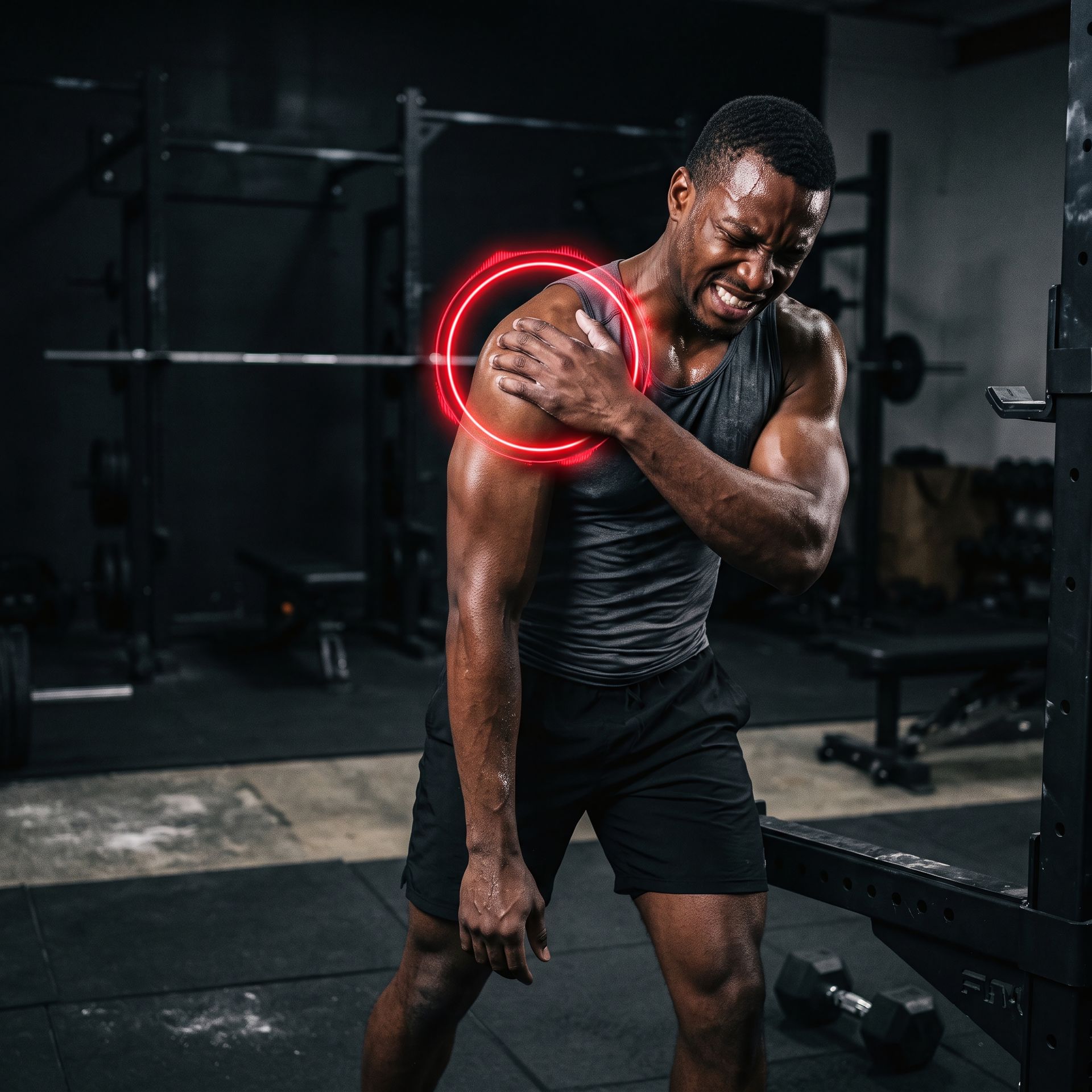
Sports Injury Treatment in Tampa, FL
Board-certified orthopedic surgeon evaluating ligament tears, dislocations, overuse injuries, and other sports-related orthopedic problems, with return-to-play planning in Tampa, Florida.
Sports Injury Care in Tampa
SunCare Orthopaedics provides orthopedic sports injury evaluation and treatment in Tampa, Florida, including ligament tears, dislocations, overuse injuries, and return-to-play planning. Phillip A. Pullen, DO evaluates the injury, personally reviews available imaging, and considers nonsurgical treatment first when appropriate, with surgery discussed when it becomes the right treatment option.
WHEN TO GET A SPORTS INJURY CHECKED
The injury does not have to end your season to deserve a clear diagnosis.
Some sports injuries happen in one moment. Others build slowly through repeated training until pain, weakness, or loss of performance becomes difficult to ignore.
The important question is not simply whether something hurts. It is what structure is injured, how much function has changed, and whether continuing the activity could make the problem worse.
Orthopedic evaluation can help establish the diagnosis and create a treatment path based on the injury rather than guessing from symptoms alone.
01
Pain after a sudden twist, fall, or collision
A quick change of direction, awkward landing, contact, or fall can injure a ligament, joint, or other musculoskeletal structure.
02
Swelling after practice or competition
Swelling after an injury can occur when tissues around a joint have been irritated or damaged and may be accompanied by pain or loss of motion.
03
A joint that feels unstable
Giving way, buckling, or feeling unable to trust a joint during cutting, jumping, landing, or running can be important after a ligament injury.
04
Pain that gradually increases with training
Overuse injuries can develop progressively when repeated stress exceeds the body's ability to recover between training sessions.
05
You can exercise, but you cannot perform normally
Reduced speed, power, strength, range of motion, or confidence during sport-specific movement can remain even when everyday activity feels relatively comfortable.
UNDERSTANDING SPORTS INJURIES
Sudden injuries and overuse injuries require different questions.
How the injury happened can provide important clues. Some orthopedic sports injuries follow a single traumatic event, while others develop gradually from repetitive loading.
Ligament Tears
Ligaments help stabilize joints. A sports-related ligament injury may occur during twisting, cutting, landing, contact, or another movement that places excessive stress on the joint.
Joint Dislocations
A dislocation occurs when the bones forming a joint are forced out of their normal position. This is an acute injury that requires prompt medical attention rather than attempting to force the joint back into place yourself.
Overuse Injuries
Overuse injuries develop gradually as repeated training or movement places ongoing stress on a structure without enough recovery. Symptoms may initially appear only during activity and become more persistent over time.
Return-to-Play Planning
Feeling better in daily life does not necessarily mean the injured area is ready for competition. Return planning considers recovery, movement, strength, stability, and the physical demands of the athlete's sport.
What happened matters as much as where it hurts.
Injury mechanism, swelling, stability, strength, movement, previous injuries, and imaging can help establish the diagnosis.
SPORTS INJURY EVALUATION
Treatment starts by understanding how the injury happened and what changed afterward.
The same painful joint can have very different injuries depending on whether symptoms followed a collision, awkward landing, twisting movement, repetitive training, or gradual increase in workload.
At SunCare Orthopaedics, Dr. Pullen takes your history, examines the injured area, and reviews how the problem is affecting movement and activity.
Available imaging is personally reviewed. If X-rays or MRI are needed, Dr. Pullen explains why the study is being recommended and what information it may provide.
Once the diagnosis is clearer, treatment can focus on healing the injury, restoring function, and determining when progression back toward normal activity is reasonable.
WHAT YOU CAN EXPECT
Sports injury care focused on getting function back safely
The goal is not simply to make an injured area hurt less. Your treatment plan should address the injury itself and what needs to recover before normal activity or sport can resume.
Injury-Specific Diagnosis
The evaluation considers the mechanism of injury, symptoms, examination, function, and imaging rather than treating every sports injury the same way.
Personal Imaging Review
Dr. Pullen personally reviews available imaging and explains when additional X-rays or MRI may be useful.
Conservative Care First
Therapy, bracing, activity modification, injections, and other nonsurgical options are considered when they have a reasonable chance of helping.
Function Is Part of the Decision
Motion, strength, stability, activity tolerance, and the physical demands of the sport matter when planning recovery.
A Diagnosis You Understand
Dr. Pullen explains the injury in plain language so you understand what was damaged and why a particular treatment is being recommended.
Follow-Through After Surgery
When surgery is required, the same surgeon who performs your operation sees you during postoperative follow-up.
YOUR SPORTS INJURY EVALUATION
From the moment of injury to a clear recovery plan
The process connects how the injury happened, what the examination shows, available imaging, and what you need to do physically before treatment and return-to-sport decisions are made.
STEP 1
Injury History
Discuss how the injury happened, when symptoms began, previous injuries, training demands, treatments already tried, and changes in performance.
STEP 2
Orthopedic Exam
Dr. Pullen examines the injured area and evaluates findings relevant to motion, strength, stability, tenderness, swelling, and function.
STEP 3
Imaging Review
Available imaging is personally reviewed. Additional X-rays or MRI may be recommended when they can clarify the injury.
STEP 4
Diagnosis
The injury is explained in plain language so you understand what happened and what needs to recover.
STEP 5
Recovery Plan
Treatment begins with nonsurgical care when appropriate, with surgery considered when indicated and return to activity planned according to recovery.
SPORTS INJURY TREATMENT OPTIONS
Not every sports injury needs surgery.
Treatment depends on which structure is injured, the severity of the problem, the effect on function, and whether conservative treatment can reasonably restore the activity you need.
CONSERVATIVE CARE
Nonsurgical Sports Injury Treatment
When an injury has a reasonable chance of improving without an operation, nonsurgical care is considered first.
Activity modification
Bracing when appropriate
Physical therapy coordination
Injections when clinically appropriate
Progressive return to activity as appropriate
WHEN APPROPRIATE
Surgical Sports Injury Treatment
Surgery is discussed when the injury cannot be adequately addressed with conservative treatment or when the nature of the injury makes surgical treatment appropriate.
Why surgery is being considered
What the procedure is intended to address
What recovery may involve
Realistic expectations for returning to activity
Postoperative follow-up with Dr. Pullen
Less pain does not always mean game-ready.
The demands of running, cutting, jumping, throwing, or contact may be greater than the demands of everyday movement.
RETURN-TO-PLAY PLANNING
Returning to sport should be based on recovery, not just the calendar.
A successful return is more than being able to walk without pain or complete normal daily activities.
Depending on the injury and sport, return-to-play planning can consider whether motion, strength, stability, and activity tolerance have recovered enough for the demands placed on the injured area.
The timeline is different for every injury. Returning too quickly can expose a recovering structure to loads it is not yet ready to handle.
- Pain and swelling have improved appropriately
- Motion has recovered sufficiently for the activity
- Strength has been restored appropriately
- The injured joint or structure is functioning reliably
- Sport-specific movements can be progressed safely
- The athlete understands the recovery and return plan
TREATMENT COSTS
What affects the cost of sports injury treatment?
Sports injury treatment does not have one fixed cost because the care needed for an overuse problem can be very different from the care needed for a ligament tear, dislocation, or surgical injury.
Insurance deductibles, copays, coinsurance, network requirements, and authorization rules may also affect out-of-pocket costs.
Orthopedic Evaluation
The first visit helps determine the likely injury and whether further testing or treatment is appropriate.
Diagnostic Imaging
X-rays or MRI may affect cost when imaging is needed to establish the extent or location of an injury.
Conservative Treatment
Bracing, therapy, injections, and other nonsurgical care create different costs depending on the injury and treatment plan.
Surgical Treatment
When surgery is appropriate, the procedure, facility, anesthesia, postoperative care, and related services may influence the overall cost.
Rehabilitation & Return
The amount of rehabilitation and follow-up needed before returning to normal activity can vary according to the injury.
CHOOSING THE RIGHT LEVEL OF CARE
When does an orthopedic sports injury evaluation make sense?
Different injuries require different levels of care. An orthopedic evaluation becomes particularly useful when pain persists, function changes, instability is present, or you need a structured path back to activity.
| CARE NEED | SUNCARE ORTHOPAEDICS | SELF-DIRECTED RECOVERY | WALK-IN / URGENT CARE |
|---|---|---|---|
| Main goal | Identify the orthopedic injury and create a treatment and recovery plan | Manage mild short-term symptoms | Assess acute injuries and urgent concerns |
| Ligament injury evaluation | Examination of relevant stability, movement, function, injury mechanism, and imaging | Severity can be difficult to determine alone | May provide initial assessment and referral |
| Persistent overuse injury | Evaluation of symptoms, training history, function, and affected structures | Often managed by reducing activity without knowing the precise cause | Usually focused on more immediate concerns |
| Imaging decisions | Available imaging personally reviewed and additional imaging considered when appropriate | Not available | Availability varies by facility |
| Return-to-play planning | Recovery can be considered in relation to activity and sport demands | Usually based on how the athlete feels | Typically not the focus of acute care |
| Surgical decision-making | Discussed when surgery becomes appropriate | Not available | Usually requires orthopedic follow-up |
Some sports injuries should not wait for a routine orthopedic appointment.
Seek prompt medical care after major trauma when there is an obvious joint deformity or suspected dislocation, severe or rapidly increasing swelling, an open injury, inability to safely bear weight or use the injured limb, significant numbness or weakness, or changes in normal circulation. Do not attempt to force a dislocated joint back into position yourself.
YOUR ORTHOPEDIC SURGEON
Understand the injury before deciding when to get back in the game.
SunCare Orthopaedics provides sports injury evaluation and treatment from its Tampa office on West Hillsborough Avenue.
Dr. Phillip A. Pullen reviews how the injury happened, examines the affected area, personally reviews available imaging, and explains the diagnosis and treatment options in understandable terms.
Nonsurgical care is considered first when appropriate. If surgery becomes the better option, Dr. Pullen explains the procedure, recovery, and realistic outcome before you decide. Return-to-play planning can then be based on the injury and your recovery.
Phillip A. Pullen, DO
Board-Certified Orthopedic Surgeon
CLINIC
SunCare Orthopaedics
PHONE
TAMPA OFFICE
6911 Pistol Range Rd, Suite 103
Tampa, FL 33635
OFFICE HOURS
Monday to Friday
9:00 AM to 5:00 PM
COMMON QUESTIONS
Sports Injury FAQs
General information about sports injury evaluation, treatment, and return-to-play planning at SunCare Orthopaedics in Tampa. Individual recommendations depend on the injury and orthopedic evaluation.
SunCare Orthopaedics evaluates and treats sports-related orthopedic problems including ligament tears, dislocations, overuse injuries, and other musculoskeletal injuries, with return-to-play planning when appropriate.
An acute sports injury occurs during a specific event such as a fall, collision, twist, or awkward landing. An overuse injury develops gradually from repeated stress or movement over time.
Ligament injuries may cause pain, swelling, tenderness, reduced motion, or instability after a twisting, landing, or contact injury. The symptoms vary according to the joint and severity of the injury.
A suspected joint dislocation requires prompt medical attention. Do not attempt to force the joint back into place yourself because surrounding nerves, blood vessels, ligaments, and other tissues can also be injured.
Overuse injuries develop when repeated loading or movement places ongoing stress on a body part. Training volume, repetition, inadequate recovery, and the physical demands of a sport can all be relevant when evaluating an overuse problem.
Not every sports injury requires MRI. Imaging needs depend on how the injury occurred, symptoms, examination findings, available previous imaging, and the suspected structure. Dr. Pullen explains why additional imaging is recommended when needed.
No. Treatment depends on which ligament is injured, severity, stability, activity requirements, examination findings, and the individual clinical situation. Nonsurgical treatment may be appropriate for some ligament injuries.
Depending on the injury, nonsurgical care may include activity modification, bracing, physical therapy coordination, injections when appropriate, and progressive return to activity.
Return timing depends on the injury and recovery. Factors can include pain, swelling, motion, strength, stability, healing, and whether the injured area can tolerate the movements required for the sport.
Not necessarily. An athlete may have little pain during normal daily activity but still lack the strength, motion, stability, or tolerance required for running, cutting, jumping, throwing, or contact. Return-to-play planning considers more than pain alone.
Persistent symptoms can be worth evaluating even when you can continue participating, especially if pain is worsening, performance is changing, swelling keeps returning, or the affected area feels weak or unstable.
Cost depends on the injury and care required and may include orthopedic evaluation, imaging, bracing, therapy, injections, follow-up, or surgery when appropriate. Insurance benefits may also affect out-of-pocket costs.
SunCare Orthopaedics is located at 8370 W Hillsborough Ave, Suite 103, Tampa, FL 33615. The office is open Monday through Friday from 9:00 AM to 5:00 PM. Call (813) 515-0840 to schedule a sports injury evaluation.